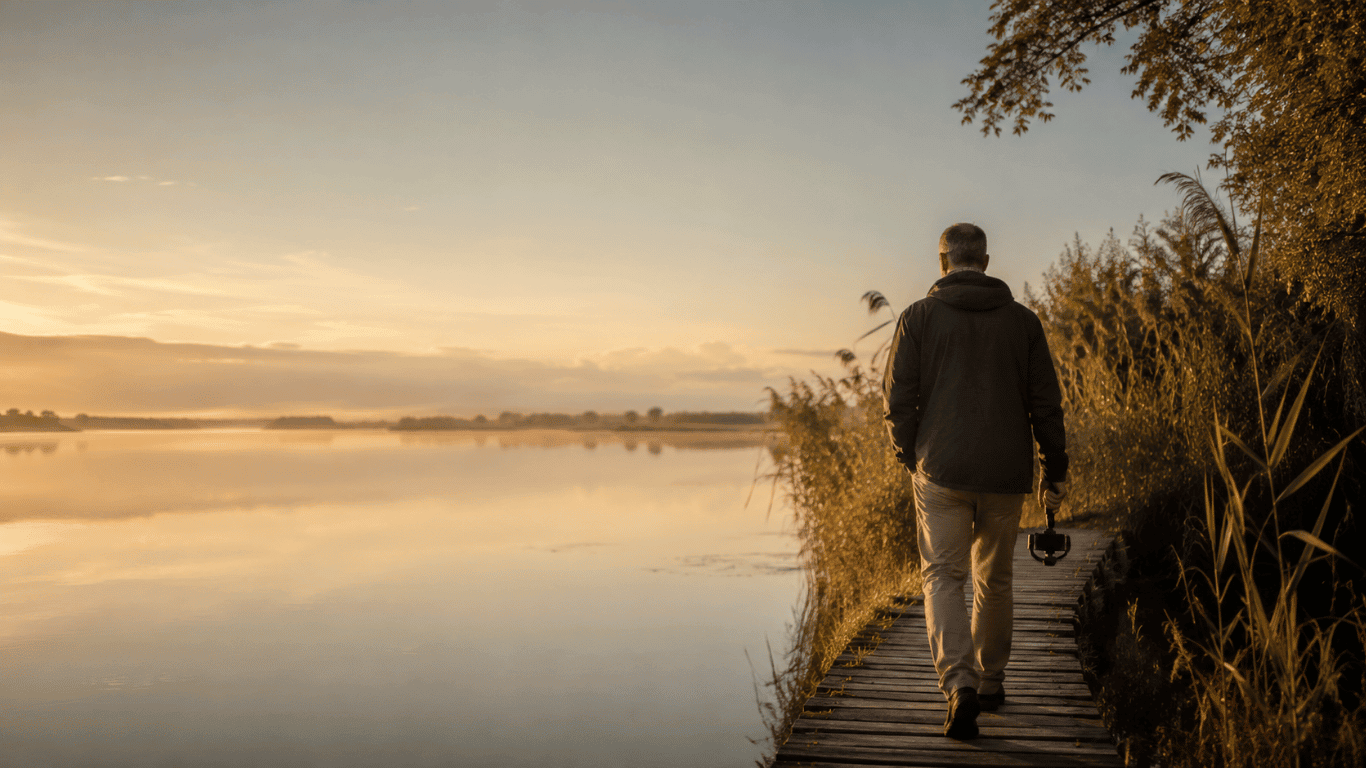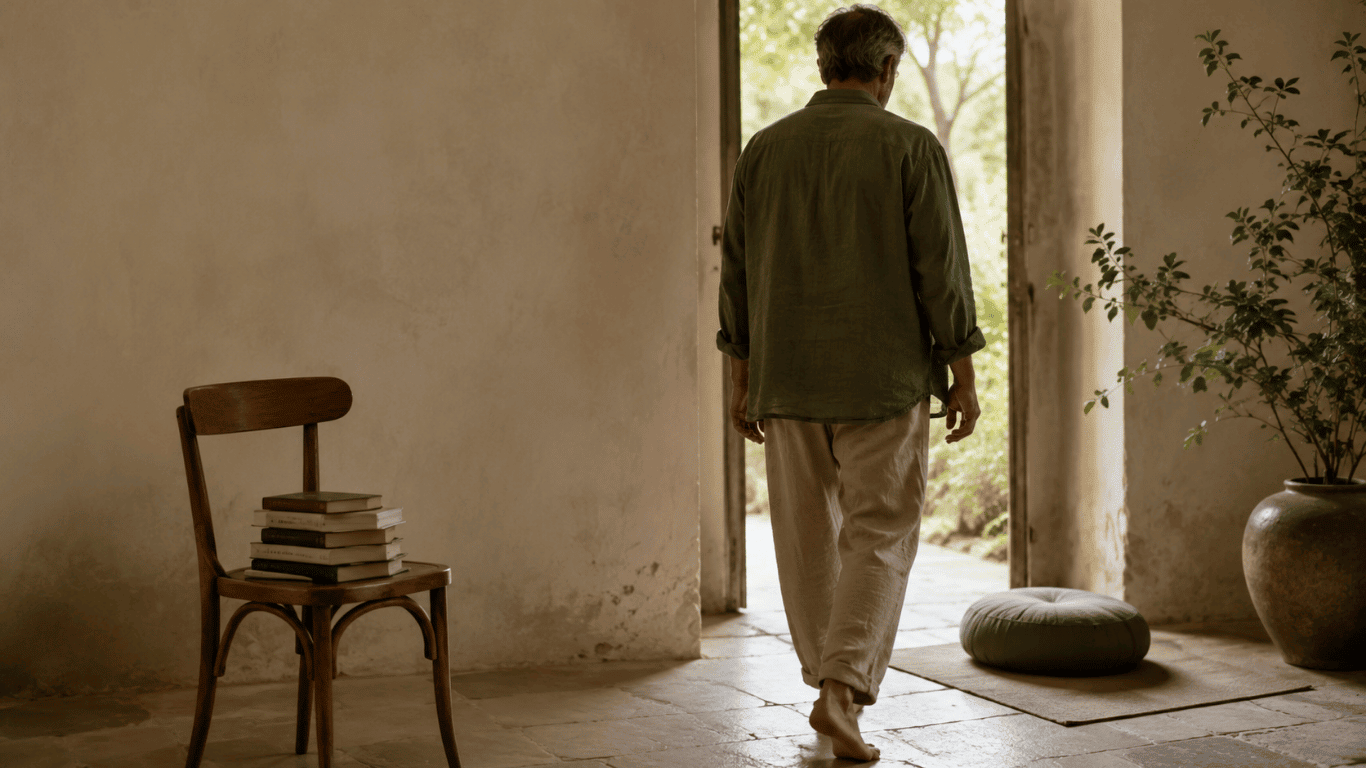

Why are you afraid to start—even when you already know what might help you?
I began thinking about this while observing someone close to me. They are genuinely interested in inner peace. They buy books about it, read them carefully, understand the ideas, and often speak warmly about what they have learned.
But they never quite begin.
The books are read. The concepts are understood. Meditation sounds meaningful. Yet the simple act of sitting down, closing the eyes, and staying with the experience for a few minutes is postponed again and again.
I do not see this as laziness. If anything, the interest is real. What fascinates me is the invisible distance between understanding something and actually entering the experience.
That distance is where fear and procrastination often live. Not always as panic or a dramatic refusal, but as one more book, one more video, one more method, or one more promise to start when the moment feels right.
Sometimes preparation is a safe form of progress
Learning feels productive. It gives us language, hope, and the sense that we are moving closer to the person we would like to become. There is nothing wrong with that. Books can open doors we did not know existed.
But preparation can also protect us from crossing the threshold. As long as meditation remains an idea, it can still be perfect. The moment we practice it, we may feel restless, impatient, distracted, or disappointed. The peaceful image meets an ordinary human nervous system.
The next book preserves possibility. Practice introduces reality.
This pattern appears far beyond meditation. We can keep researching a business without publishing the first offer, watch videos about creativity without making anything, or plan a healthier life without taking the first walk. Information allows us to stay close to change without yet being changed by it.
| A difficult question: Are you still learning because you need more understanding—or because learning feels safer than beginning? |
|---|
Procrastination is often about emotion, not time
We often treat procrastination as a planning problem. We look for a better calendar, a stronger routine, or more discipline. These things can help, but they do not always touch the reason the delay began.
Psychologist Fuschia Sirois describes procrastination as an avoidant way of coping with unpleasant task-related emotions. Delaying the action can make us feel better now, even when it creates more stress later. Read the 2023 research review.
This explains why advice such as “just do it” can feel strangely ineffective. The person may already know what to do. The real obstacle is the feeling that appears when doing it becomes immediate.
Perhaps meditation brings up restlessness. Perhaps starting a creative project exposes the possibility of being judged. Perhaps applying for a new role risks rejection. Perhaps a new habit threatens the familiar identity of someone who has quietly concluded, “I never stay consistent.”
Procrastination offers short-term relief from those feelings. The task disappears from the present moment. Unfortunately, the relief can teach the mind that avoidance worked, making the same response more likely the next time discomfort appears.
Research on avoidance learning shows how relief from an expected threat can reinforce avoidance, even when avoidance keeps fear alive. See the review by Krypotos and colleagues.
Why the mind prefers what it already knows
It is tempting to say that the brain simply wants safety. The truth is more nuanced, but the basic intuition contains something important: uncertainty is demanding.
Neuroscience research suggests that uncertainty about a possible future threat can intensify anticipation and anxiety because we cannot predict what will happen or prepare a clear response. Read Grupe and Nitschke’s review.
Beginning creates uncertainty. Will I be good at this? Will it work? Will I continue? What will I discover about myself? Remaining in preparation keeps these questions theoretical. Action turns them into lived experience.
The familiar is not always comfortable, but it is predictable. Even frustration can become a known room. Starting means opening a door without knowing exactly what is on the other side.
What are we actually afraid of?
Fear of starting is rarely one single fear. It can hide several different concerns beneath the same delay.
- Fear of failure: If I begin and stop, I may use the experience as proof that I cannot change.
- Fear of being a beginner: Understanding a subject can make me feel capable; practicing it may make me feel clumsy again.
- Fear of disappointment: The real experience may not feel as powerful, peaceful, or transformative as I imagined.
- Fear of judgment: Once I create, publish, apply, or speak, other people can respond.
- Fear of identity change: A new practice may quietly challenge the story I have repeated about who I am.
- Fear of responsibility: If the first step works, I may have to decide whether I am willing to continue.
Naming the specific fear matters. “I am procrastinating” is a description. “I am afraid that trying will expose my inconsistency” begins to reveal what the delay is protecting.
My own pattern lives at the other extreme
I recognize this pattern partly because my own instinct is often the opposite. I tend to take risks. I begin new things, test ideas, invest energy, and move before every question has been answered. Sometimes that has opened valuable possibilities. Sometimes I have taken too much risk and moved faster than the situation required.
For a while, it would have been easy to interpret this contrast too simply: one person is afraid to begin, while the other is courageous enough to act.
I no longer think that is the whole story.
Waiting can be a way of escaping uncertainty, but constant action can be one too. One person delays until certainty arrives. Another person jumps quickly because sitting with uncertainty feels unbearable.
Courage is not measured only by speed. Sometimes courage means taking the first imperfect step. At other times, it means pausing long enough to understand why we are rushing.
The healthier place may be somewhere between paralysis and impulsiveness: enough reflection to choose consciously, followed by enough action to let reality teach us what thought alone cannot.
Inner peace cannot be collected
A book about meditation can explain attention, awareness, and presence. It can introduce the wisdom of people who have practiced for decades. It can inspire us to see life differently.
But the book cannot sit in silence for us.
At some point, inner peace stops being an idea we admire and becomes a relationship with an ordinary moment. We sit down. The mind wanders. We notice it. We return. Perhaps nothing special happens. Yet this unremarkable return may be the beginning of the practice we kept searching for in theory.
This is true of many forms of personal growth. Understanding can show us the direction. Only experience reveals how the path feels beneath our own feet.
How to begin without waiting for fear to disappear
The goal is not to become fearless before taking action. That can become another delay. A more useful aim is to make the first step small and honest enough that fear does not have to control the entire decision.
- Name the feeling before solving it. Write one sentence: “If I start, I am afraid that…” Do not improve the answer. Let it be specific.
- Reduce the first action until it feels almost too small. Do not begin with a thirty-minute meditation routine. Sit for two minutes. Do not write the whole article. Write the opening paragraph.
- Separate starting from succeeding. The first practice is not a test of your future identity. It is only one experience from which you can learn.
- Give the action a visible cue. Place the meditation cushion beside the bed, open the document before leaving work, or put walking shoes near the door.
- Expect resistance. Restlessness does not mean the practice is wrong. Fear does not automatically mean the decision is dangerous. Sometimes discomfort simply means the experience is new.
- Review without judgment. After the action, ask what made it easier, what made it harder, and what you would adjust next time.
| For the meditation example: Before buying another book, choose one idea from the books you already own and practice it for two minutes a day for one week. The purpose is not to become a meditator in seven days. It is to cross the distance between knowing and doing. |
|---|
Consistency helps—but it should not become another form of perfection
Repeating a behavior around a familiar cue can reduce the number of decisions required to begin. Yet even here, there is no need to create another rigid standard.
A 2025 study of long-term meditation app use found that consistent timing supported maintenance for some users, while many others maintained meditation through less consistent patterns. Read the study.
The practical lesson is not that everyone must meditate at the same time. It is that a supportive cue may help, but the system must still fit the person. Structure should make beginning easier, not provide another standard against which to fail.
Curiosity can create a bridge between fear and action
When fear appears, judgment usually makes the inner struggle stronger. We call ourselves lazy, weak, inconsistent, or undisciplined. Curiosity changes the question.
What is this hesitation trying to protect me from?
What would make the first step feel safer without removing all challenge?
What could I learn from one small attempt?
Curiosity does not guarantee action, but it loosens the verdict. Instead of fighting ourselves, we begin to understand the function of the resistance. That understanding can make a more compassionate form of courage possible.
The real beginning is usually quiet
We often imagine beginnings as dramatic decisions. A new identity. A powerful morning. A clear promise that everything will now be different.
Most real beginnings are smaller. Someone sits on the edge of a chair and breathes for two minutes. Someone opens an empty document and writes an imperfect sentence. Someone takes a short walk without waiting to feel motivated.
The fear may still be present. The difference is that it is no longer making the whole decision.
Books, plans, and ideas can guide us toward the door. Eventually, however, we have to place one foot beyond what is familiar.
What are you still preparing to begin—and what would the smallest honest first step look like today?