

Affiliate disclosure: Some links in this article are affiliate links. If you sign up or make a qualifying purchase through them, I may earn a commission at no extra cost to you.
A Practical Guide to Building a Calmer and More Resilient Life
Financial wellness is one of those phrases that appears everywhere—from bank advertisements to workplace benefits—but it often feels vague. Many people assume it’s simply another way of saying “being wealthy.”
That assumption can make financial wellness feel out of reach.
If you’re working full-time, paying bills, supporting a family, and wondering whether you’ll ever feel financially secure, hearing about “financial wellness” can sometimes sound like advice meant for someone else.
I used to think something similar.
I believed financial wellbeing would arrive once I earned enough money. One day, I imagined, there would be a number in my bank account that would finally make everything feel easier.
Over time, my perspective changed.
The biggest difference wasn’t a dramatic increase in income. It was a gradual shift in how I thought about money, decisions, and the systems quietly shaping my everyday life.
Today, financial wellness means something much simpler—and much more meaningful—to me.
It means sleeping a little better because I know I’m slowly building stability in the background.
Not perfection.
Not luxury.
Just more options tomorrow than I have today.
Financial Wellness Is About More Than Money
Money certainly matters.
It pays for housing, food, healthcare, education, and countless everyday necessities. Ignoring its importance isn’t realistic.
But financial wellness isn’t measured only by how much you earn.
Two people with identical incomes can experience completely different levels of financial wellbeing.
One constantly feels anxious, living from one unexpected expense to the next.
The other has created habits and systems that provide flexibility, even if life isn’t perfect.
The difference isn’t always income.
Often, it’s resilience.
Financial wellness is the confidence that comes from knowing you can handle life’s uncertainties without every setback becoming a crisis.
It’s the ability to make decisions based on your values rather than constant financial pressure.
Why Financial Stress Affects More Than Your Bank Account
Financial stress rarely stays confined to your finances.
It follows you into work.
Into family conversations.
Into your sleep.
Into the small decisions you make every day.
When money feels uncertain, it’s difficult to think beyond immediate needs.
Your attention naturally shifts toward solving today’s problems instead of preparing for tomorrow’s opportunities.
I’ve experienced this myself.
During periods when money felt tight, even simple decisions seemed heavier than they really were.
Should I invest in learning a new skill?
Could I afford to take a day off?
Was it safe to try something different?
Those weren’t simply financial questions.
They were questions about security.
Looking back, I realise that reducing financial stress wasn’t only about earning more.
It was about gradually increasing my margin for error.
Financial Wellness Creates More Choices
One idea has become increasingly important to me over the years.
Freedom isn’t the absence of work.
It’s having options.
When you have financial breathing room, even in small amounts, everyday life begins to feel different.
Unexpected expenses become inconveniences rather than emergencies.
Career decisions become less frightening.
Learning new skills feels like an investment instead of a risk.
You can make decisions with greater patience because not every choice has to solve an immediate financial problem.
This is why I think financial wellness is really about creating choices.
The more flexibility you build into your life, the calmer many decisions become.
The Quiet Power of Financial Resilience
Life is unpredictable.
Cars break down.
Health changes.
Jobs evolve.
Economic conditions shift.
Financial resilience doesn’t prevent these things from happening.
It helps you respond without feeling overwhelmed by every unexpected event.
Resilience grows through small actions repeated consistently.
Building an emergency fund.
Reducing unnecessary debt.
Learning valuable skills.
Diversifying income over time.
Living slightly below your means when possible.
None of these actions are exciting on their own.
Together, they create stability that becomes increasingly valuable with time.
Building Systems Instead of Chasing Quick Fixes
One of the biggest lessons I’ve learned is that systems are usually more reliable than motivation.
Motivation comes and goes.
Good systems continue working even on ordinary days.
Instead of asking:
“How can I make more money as quickly as possible?”
I’ve found it more helpful to ask:
“What system can I build today that makes life easier six months from now?”
Sometimes that system is automatic savings.
Sometimes it’s tracking expenses.
Sometimes it’s investing time each week in learning a valuable digital skill.
Small systems reduce mental clutter because they eliminate hundreds of tiny decisions.
The result isn’t only financial progress.
It’s peace of mind.
My Definition of Financial Wellness
People often ask what financial wellness means to me personally.
My answer has changed over the years.
Today, it looks something like this:
Financial wellness doesn’t mean luxury. It means I sleep more peacefully because I know a stable system is slowly being built in the background.
That system isn’t perfect.
Neither am I.
But every month it becomes a little stronger.
Every habit makes the next decision slightly easier.
Every improvement creates a little more flexibility.
That feels far more sustainable than chasing dramatic financial breakthroughs.
Why an Online Business Can Support Financial Wellbeing
One reason I’ve become interested in online business is not because I wanted to escape work.
Quite the opposite.
I wanted to create additional options while keeping the stability I already had.
Building something alongside a full-time job changed my perspective.
There was no pressure to replace my income overnight.
Instead, I could learn gradually.
Experiment carefully.
Improve one step at a time.
Whether it’s blogging, affiliate marketing, digital products, or another online project, the goal isn’t immediate wealth.
It’s creating another layer of resilience.
A second income stream—even a modest one—can reduce financial pressure in ways that aren’t always visible on a spreadsheet.
Sometimes its greatest value is psychological.
Knowing you aren’t entirely dependent on one source of income changes how you approach the future.
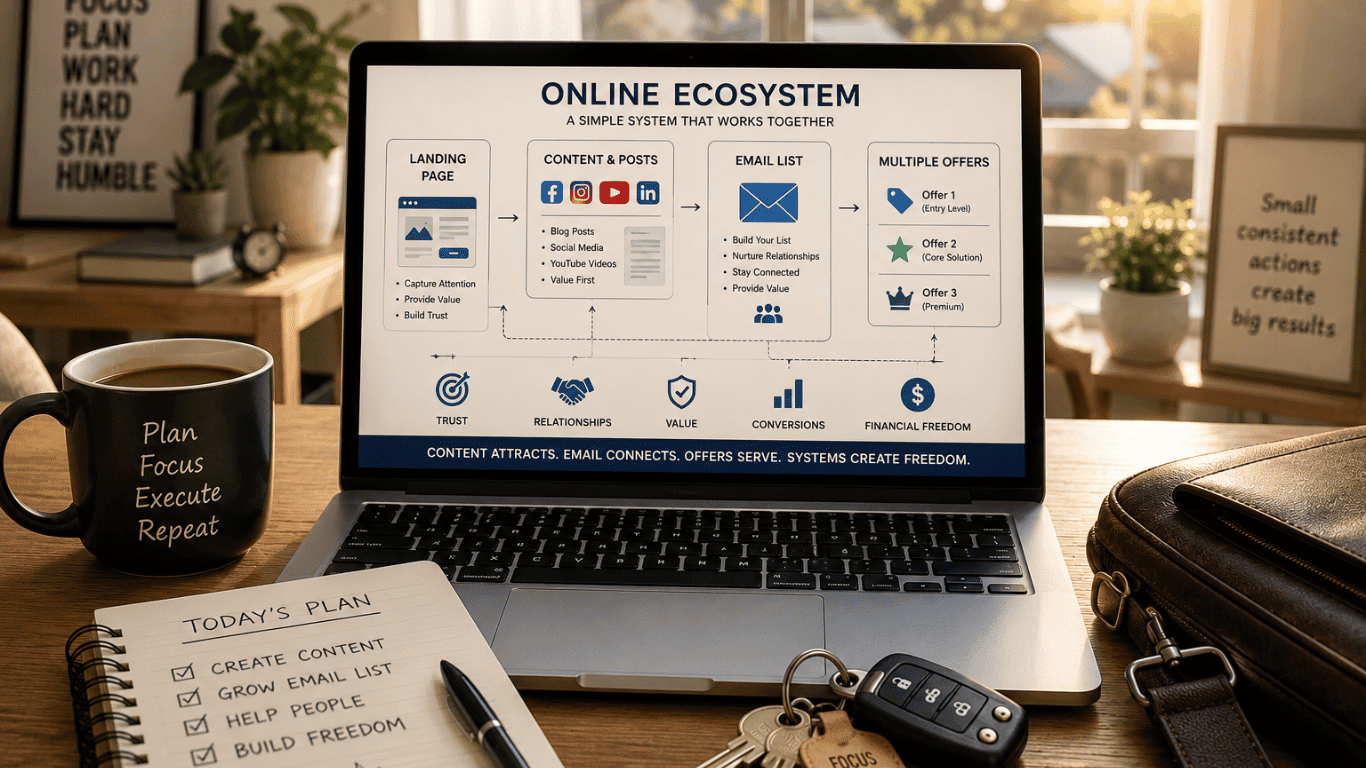
We’ll explore this idea in more detail in a future article about building an intentional online ecosystem that supports long-term financial resilience.
Financial Wellness and Intentional Living Go Hand in Hand
Money influences almost every part of life, but it doesn’t need to dominate it.
I’ve noticed that as my financial habits improved, other areas of life became calmer too.
I worried less.
I planned further ahead.
I became more selective about where I spent both money and attention.
Financial wellness isn’t separate from living intentionally.
The choices we make with our money often reflect the choices we make with our time, energy, and priorities.
Both become easier when we stop reacting to every short-term pressure and begin building systems that support the life we actually want.
I’ll be exploring this relationship further in upcoming articles about conscious living and creating a more balanced relationship with work, technology, and everyday decision-making.
Small Steps That Improve Financial Wellbeing
You don’t need to transform your finances overnight.
In fact, trying to change everything at once usually creates more stress.
Instead, consider starting with one practical step:
- Build a small emergency fund, even if you begin with a modest goal.
- Track your spending for a month without judging yourself.
- Learn one new skill that could increase your earning potential.
- Set up an automatic monthly savings transfer.
- Spend thirty minutes each week improving your financial knowledge.
- Explore one online income opportunity without expecting immediate results.
None of these actions will change your life tomorrow.
Together, they can gradually change how tomorrow feels.
Frequently Asked Questions
What is financial wellness?
Financial wellness is the ability to manage your financial life with confidence. It involves having enough stability, flexibility, and resilience to handle everyday expenses, prepare for unexpected events, and make decisions with less financial stress.
Is financial wellness the same as being wealthy?
No. Someone with a high income can still experience significant financial stress, while someone with a more modest income may enjoy strong financial wellbeing through thoughtful planning, healthy habits, and reliable systems.
Why is financial resilience important?
Financial resilience helps you recover from unexpected challenges such as job changes, medical expenses, or economic uncertainty without every setback becoming a crisis.
Can a side income improve financial wellness?
It often can. A carefully built side income can create additional flexibility and reduce dependence on a single source of income. The goal isn’t replacing your job overnight but gradually increasing your options.
How long does it take to improve financial wellbeing?
Financial wellness develops gradually. Small improvements made consistently over months and years usually produce more sustainable results than dramatic short-term changes.
What’s the first step toward better financial wellness?
Start by understanding your current financial situation without self-criticism. From there, focus on one manageable improvement—whether that’s saving regularly, reducing unnecessary expenses, or learning a valuable new skill.
Final Thoughts
The older I get, the less I think financial wellness is about reaching a destination.
Instead, I see it as building a foundation.
A foundation that allows life to become a little less reactive.
A little less stressful.
A little more intentional.
There will always be uncertainty. That’s part of life.
But we can influence how prepared we are to meet it.
For me, financial wellness isn’t measured by luxury or status.
It’s measured by something quieter.
The confidence that comes from knowing I’m slowly building a stable system in the background—one that gives me more choices, more flexibility, and a little more peace of mind with every passing year.
Your next step: Choose one small financial system you can put in place this week. It doesn’t have to be ambitious. The goal isn’t perfection—it’s creating a little more stability than you had yesterday.


Pingback: The Psychology of Financial Dependence