
Affiliate disclosure: Some links in this article are affiliate links. If you sign up or make a qualifying purchase through them, I may earn a commission at no extra cost to you.
How to Create More Financial Freedom
There was a time when I believed that having more money would automatically solve my problems.
If I could earn a little more, I thought, life would finally become less stressful. I would have more time, better opportunities, and greater peace of mind.
But over time, I realized something surprising.
Money matters—but financial stress affects far more than your bank balance. It quietly shapes how you think, how you make decisions, and how much of your future you can actually see.
Many people don’t struggle because they lack intelligence, ambition, or discipline.
They struggle because they’re constantly operating in survival mode.
And survival mode isn’t a place where long-term thinking naturally happens.
It’s a place where every decision feels urgent.
What Survival Mode Really Looks Like
When people hear “survival mode,” they often imagine extreme situations.
In reality, it can look surprisingly ordinary.
You wake up already thinking about bills.
You check your bank account more often than you’d like.
Unexpected expenses feel overwhelming instead of inconvenient.
You postpone plans that matter because “now isn’t the right time.”
You stay in a job you no longer enjoy because leaving feels too risky.
On the surface, life continues as usual.
Inside, however, your mind is constantly calculating risk.
That mental load is exhausting.
Financial stress isn’t only about having too little money.
It’s about feeling like you have too few options.
How Stress Changes the Way We Think
One lesson that completely changed my perspective came from reading philosophy alongside books about psychology and decision-making.
Many of those ideas pointed toward the same truth:
Focus your attention on what you can actually influence.
We spend enormous amounts of energy worrying about things outside our control.
Inflation.
The economy.
Interest rates.
Company decisions.
Global events.
These things matter.
But worrying about them rarely improves our situation.
The more helpful question becomes:
What can I change today?
Sometimes the answer is surprisingly small.
Learning a new skill.
Saving a little more consistently.
Reducing unnecessary expenses.
Starting a small project after work.
Building one useful habit.
These actions don’t eliminate uncertainty overnight.
They slowly increase your room to breathe.
The Hidden Cost of Constant Financial Pressure
Financial stress quietly steals more than money.
It steals attention.
Energy.
Creativity.
Patience.
Long-term thinking becomes difficult because every problem feels immediate.
Imagine trying to build a house while someone keeps pulling away your ladder.
That’s what constant financial pressure often feels like.
Even motivated people begin making short-term decisions simply because they’re mentally exhausted.
This isn’t a character flaw.
It’s a very human response to uncertainty.
Creating Room to Breathe Before Chasing Bigger Goals
One of the biggest changes in my own thinking was realizing that freedom isn’t something you suddenly achieve one day.
It’s something you gradually create.
Every thoughtful financial decision increases your future choices.
Every system you build reduces future stress.
That shift changed how I approached work.
Instead of trying to escape my job as quickly as possible, I started asking a different question:
“How can I build something alongside it?”
That question felt calmer.
More realistic.
Less dramatic.
And much more sustainable.
Why I Started Building an Online Income While Still Working Full-Time
Many online success stories begin with someone quitting everything to pursue a dream.
Mine didn’t.
I kept my job.
That decision wasn’t driven by fear.
It was driven by stability.
A steady income gave me space to experiment without placing enormous pressure on every decision.
Instead of expecting immediate results, I could learn.
Test ideas.
Improve slowly.
Make mistakes without creating a financial crisis.
That approach dramatically reduced stress.
Ironically, having stability made it easier to build something new.
Small Systems Often Beat Big Dreams
When people think about changing their financial future, they often imagine one massive breakthrough.
A promotion.
A business that suddenly takes off.
Winning big.
Real life usually looks different.
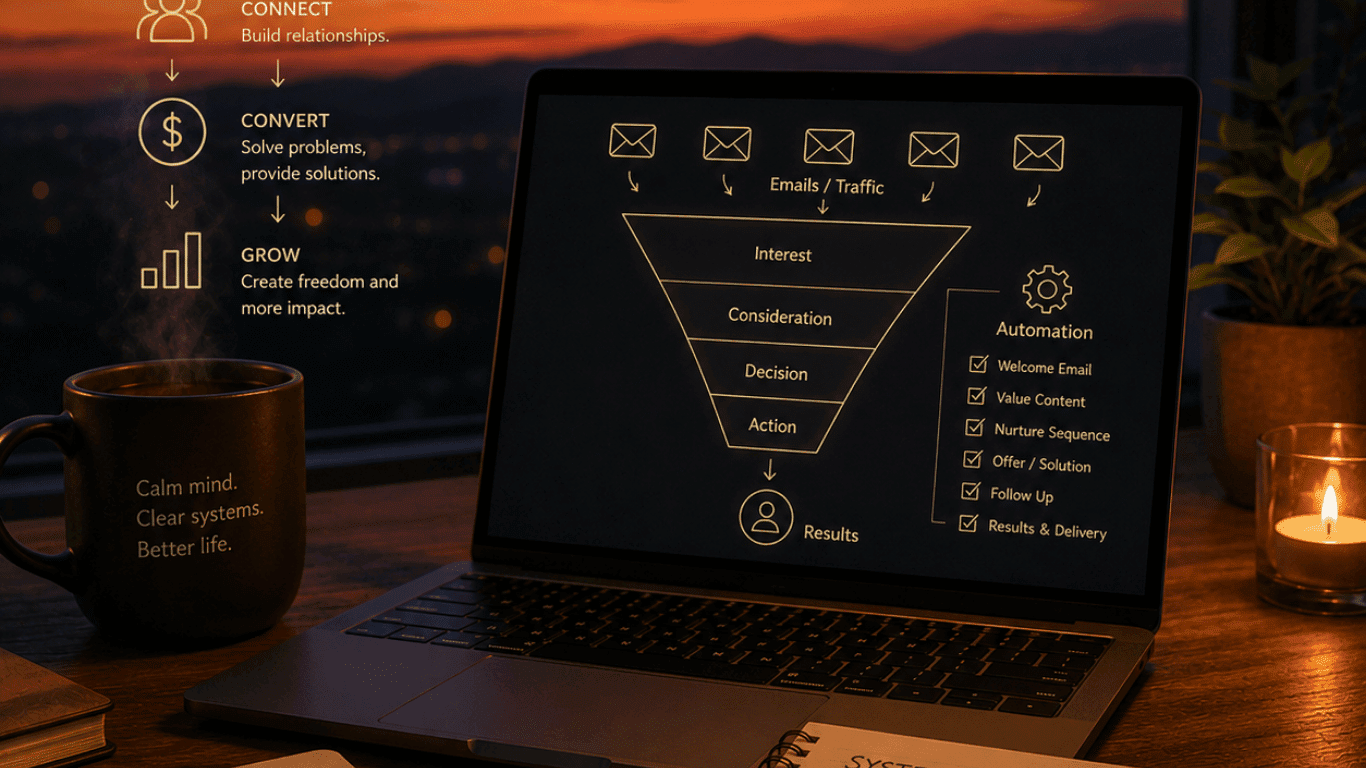
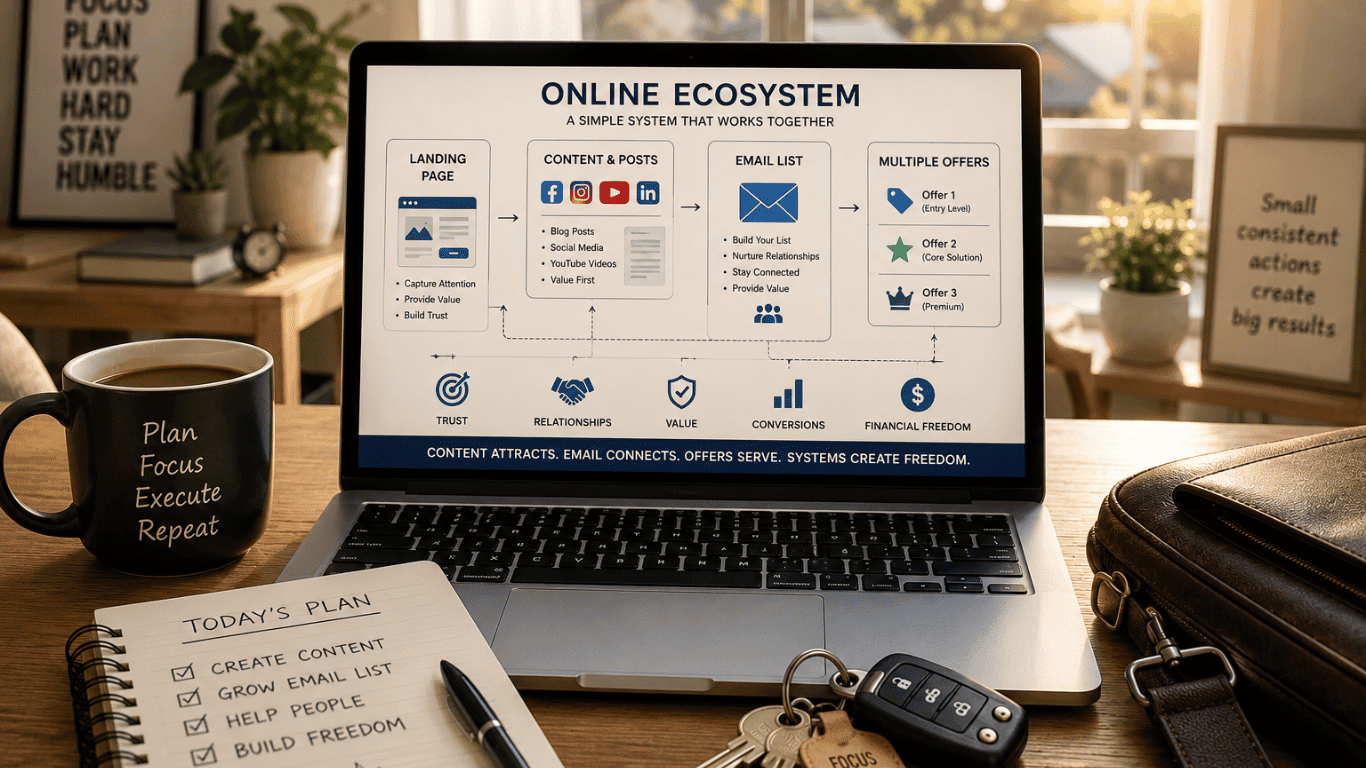
Meaningful change is often the result of small systems repeated consistently.
Reading twenty pages every day.
Learning one new marketing skill each week.
Publishing one helpful article.
Saving automatically every month.
Improving one process at a time.
These habits don’t feel exciting in the moment.
But over months and years, they quietly reshape your life.
Systems reduce decision fatigue.
And less decision fatigue means more energy for meaningful work.
Technology Can Create More Freedom—If You Use It Intentionally
Technology often gets blamed for distraction.
Sometimes that’s true.
But technology is simply a tool.
Like any tool, its value depends on how we use it.
The internet makes it possible to learn new skills, connect with people around the world, and create income streams that didn’t exist a generation ago.
Used intentionally, technology can help create flexibility rather than overwhelm.
The key is using it to build rather than endlessly consume.
A Resource That Helped Me Get Started
As I explored different ways to build an online business alongside my regular job, I wanted something practical rather than another promise of overnight success.
One resource that genuinely helped me was the ClickBank Profit Club.
What appealed to me wasn’t the idea of getting rich quickly.
It was the focus on learning systems, understanding affiliate marketing, and building something steadily without disrupting my existing life.
It became one of several resources that helped me better understand how online income can be built patiently, one step at a time.
No single course changes your life on its own.
But the right learning resource, combined with consistent action, can shorten the learning curve considerably.
Freedom Isn’t About Working Less
One idea has stayed with me throughout this journey.
Work isn’t the enemy.
A lack of options often is.
Having choices changes everything.
The ability to take a break.
To help your family.
To handle unexpected expenses without panic.
To explore a different career.
To say no when something no longer fits your values.
That kind of freedom rarely appears overnight.
It’s built slowly.
Decision by decision.
Habit by habit.
System by system.
Final Thoughts
Financial stress can convince us that life will always feel rushed, uncertain, and reactive.
But that isn’t the whole story.
We may not control the economy, our employer, or every unexpected challenge that comes our way.
What we can control is the next decision.
The next habit.
The next skill we choose to develop.
The next small system we put in place.
Looking back, I don’t think the biggest change in my life came from earning more money.
It came from thinking differently about what money was really giving me.
Not status.
Not perfection.
Not an escape from work.
It gave me something much quieter—and ultimately much more valuable.
More choices.
More flexibility.
And a little more peace of mind each step along the way.